


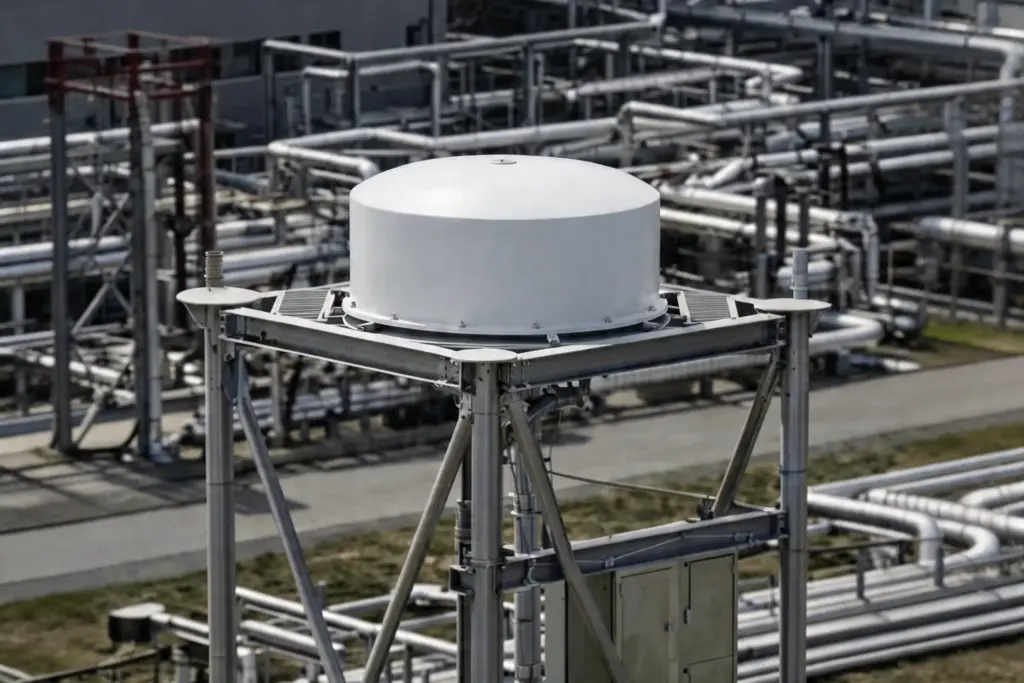
Drone Detection System
What Makes an Effective Drone Detection System?
A Deep Dive into Modern RF-based UAV Defense
As the use of unmanned aerial vehicles (UAVs) rapidly expands, so do concerns surrounding unauthorized or hostile drone activity. Today, drones threaten airports, military bases, critical infrastructure, public events, and sensitive industrial operations. These rising risks have made the drone detection system one of the most important components in modern security and defense architecture.
A reliable detection solution must not only identify the presence of a drone — it must do so fast, accurately, and under demanding real-world conditions. Modern defense environments require precision engineered systems capable of monitoring wide RF spectrums, classifying drone signals, decoding communication protocols, and providing actionable intelligence in real time. The NOFFZ Aerospace & Defense portfolio—especially the advanced NORD drone detection system—embodies these capabilities.
Why Drone Detection Systems Are Now Mission Critical
Drone technology has evolved at an unprecedented pace. Today’s UAVs can fly long distances, carry payloads, stream encrypted video, use GPS navigation, and operate autonomously. This has created vulnerabilities for:
- Air traffic safety
- Government and defense facilities
- Energy and telecommunications infrastructure
- Industrial and research environments
- Large public gatherings and high-profile events
To counter these threats, organizations need detection systems that go beyond simple visual spotting or acoustic signatures. RF based drone detection has become the preferred method due to its accuracy, reliability, and ability to detect drones without requiring line of sight.
Essential Capabilities of a Modern Drone Detection System
A high-performance drone detection system must deliver a combination of hardware and software capabilities that enable:
- Real‑Time Drone Detection and Tracking
Modern systems must instantly identify drone signals and track movement across a large area. Speed is essential for early threat response, especially around airports or defense installations. The NOFFZ NORD system achieves real-time detection and identification using advanced RF sensors combined with highspeed FPGA signal processing. - Wideband RF Monitoring
To identify both commercial and custom-built drones, a detection system must analyze a broad RF spectrum.
NORD monitors frequencies ranging from 70 MHz to 6 GHz, enabling detection of a wide range of UAV communication patterns. - 360° Situational Awareness
A full panoramic view is essential for large or high security areas. NORD uses sector antennas with fast RF switching that scan the entire environment in less than two seconds, offering 360° azimuth and 90° elevation coverage. - Drone Protocol Decoding
Understanding who is operating a drone — and from where — is crucial. NORD provides real-time DJI protocol decoding, offering insights such as Drone ID, Drone GPS, Pilot GPS, and Home GPS. - Integration with Defense Grade Systems
Elite-security scenarios demand layered protection.
NORD supports integration with jammers, optical surveillance systems, and central command units, enabling seamless multi-sensor security. - Environmental Flexibility
Defense operations take place in varied environments.
NORD offers indoor and outdoor configurations and multiple ruggedization levels based on customer requirements.
How RF Based Drone Detection Works
RF based detection identifies drones by analyzing their radio frequency emissions. This method offers several advantages:
- Works beyond visual line of sight
- Detects drones even in GPS denied or lowlight environments
- Identifies both drone and pilot location
- Provides earlier warning than optical systems
The NORD system enhances RF detection via:
- High‑speed channel analysis (operating frequency, bandwidth, signal power)
- Independent receiving chains for improved reliability and easier maintenance
- FPGA accelerated processing for rapid classification and signal decoding
These capabilities make RF detection especially suitable for aerospace, defense, and critical infrastructure scenarios.
Inside the NORD Drone Detection System
The NORD platform is engineered specifically for high security needs within aerospace and defense. Key features include:
- Real‑time detection, identification, and tracking
Powered by FPGA based signal processing for rapid data analysis. - Wideband frequency coverage (70 MHz – 6 GHz)
Detects various drone communication standards—including modified or custom RF transmissions. - Fast RF scanning with sector antennas
Provides full space scanning in under 2 seconds for maximum situational awareness. - Deep DJI protocol decoding
Identifies drone location, pilot coordinates, and key telemetry data. - Modular integration with counter UAS components
Works with jammers, optical systems, and central control centers. - Flexible deployment options
Supports indoor/outdoor environments with customizable ruggedization levels.
These features make NORD one of the most adaptable and powerful drone detection systems available for high risk sectors.


Drone Detection Use Cases in Aerospace & Defense
- Airport Perimeter Security
Unauthorized drones can disrupt flights, endanger passengers, and violate airspace. - Military Bases and Restricted Zones
Protecting personnel, vehicles, and sensitive operations requires early warning. - Government & Intelligence Facilities
Prevent surveillance, intrusion, or espionage. - Communications & Energy Infrastructure
Drones pose risks to power stations, telecom towers, and substations. - High Security Events
Political summits, stadiums, and public gatherings need strict aerial monitoring.
The Power of SDR & FPGA in Drone Detection
Software Defined Radio (SDR) and FPGA processing elevate drone detection to the next level:
- SDR enables flexible, reconfigurable monitoring across wide RF bands
- FPGA hardware accelerates signal analysis for ultra‑fast identification
- Reduced latency improves response times
- Better performance in congested RF environments
Combined, these technologies allow NORD to meet the rigorous demands of modern aerospace and defense operations.
Future Trends in Drone Detection Technology
As UAV threats grow more complex, drone detection systems will increasingly incorporate:
- AI powered RF classification
Machine learning for pattern recognition and threat scoring. - Autonomous counter UAS responses
Automated signal disruption or surveillance workflows. - Enhanced GNSS analysis
Detection of spoofing, jamming, and anomalous navigation behavior.
These developments will further strengthen multilayer defense strategies and reduce human workload during high pressure scenarios.
Conclusion: The Drone Detection System as a Core Security Asset
In today’s environment, drone detection is not optional — it is a critical layer of protection for any high value operation. The NOFFZ NORD system stands out by offering:
- Real‑time tracking
- Deep drone and pilot identification
- Wideband RF scanning
- Highspeed FPGA based processing
- Full integration with advanced counter UAS tools
Its precision engineering makes it ideal for aerospace, defense, and high security industries where reliability and accuracy are nonnegotiable. As UAV threats continue to evolve, advanced RF-based detection systems like NORD will be at the heart of safeguarding the airspace around the world.
Click below to learn more about our solution: