
RF-BASED DRONE DETECTION SYSTEM WITH REAL-TIME PROTOCOL DECODING.
MEET US AT EUDEX 2026
22-25 September 2026 | Essen, Germany | Booth 3B29

Explore Innovation. Redefine Defense.
Drone Detection and Radar Systems for Defense
At NOFFZ Technologies we specialize in the design and development of advanced, highly customized radio communication systems tailored for the most demanding applications in the Aerospace & Defense sector. Our expertise in cutting-edge technologies, including Software-Defined Radio (SDR) and FPGA-based signal processing, enables us to deliver unparalleled performance and reliability.
From radar transceivers to drone detection systems and GNSS solutions, we provide mission-critical systems designed to meet the unique challenges of modern aerospace and defense operations. Partner with us to elevate your capabilities with precision-engineered communication solutions.
TEST SYSTEMS
From Validation Platforms to Production-ready Test Systems
The UTP Platform
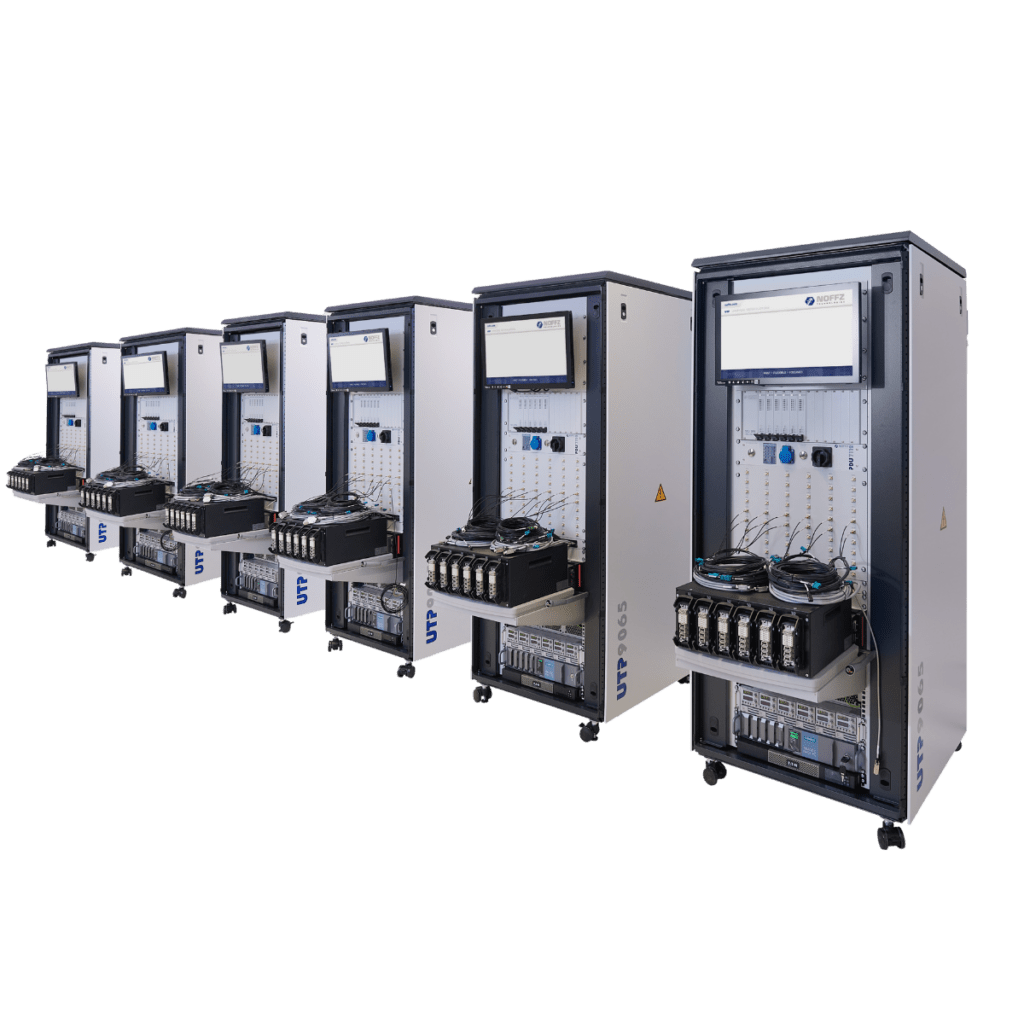
Flexible Adapter Platform
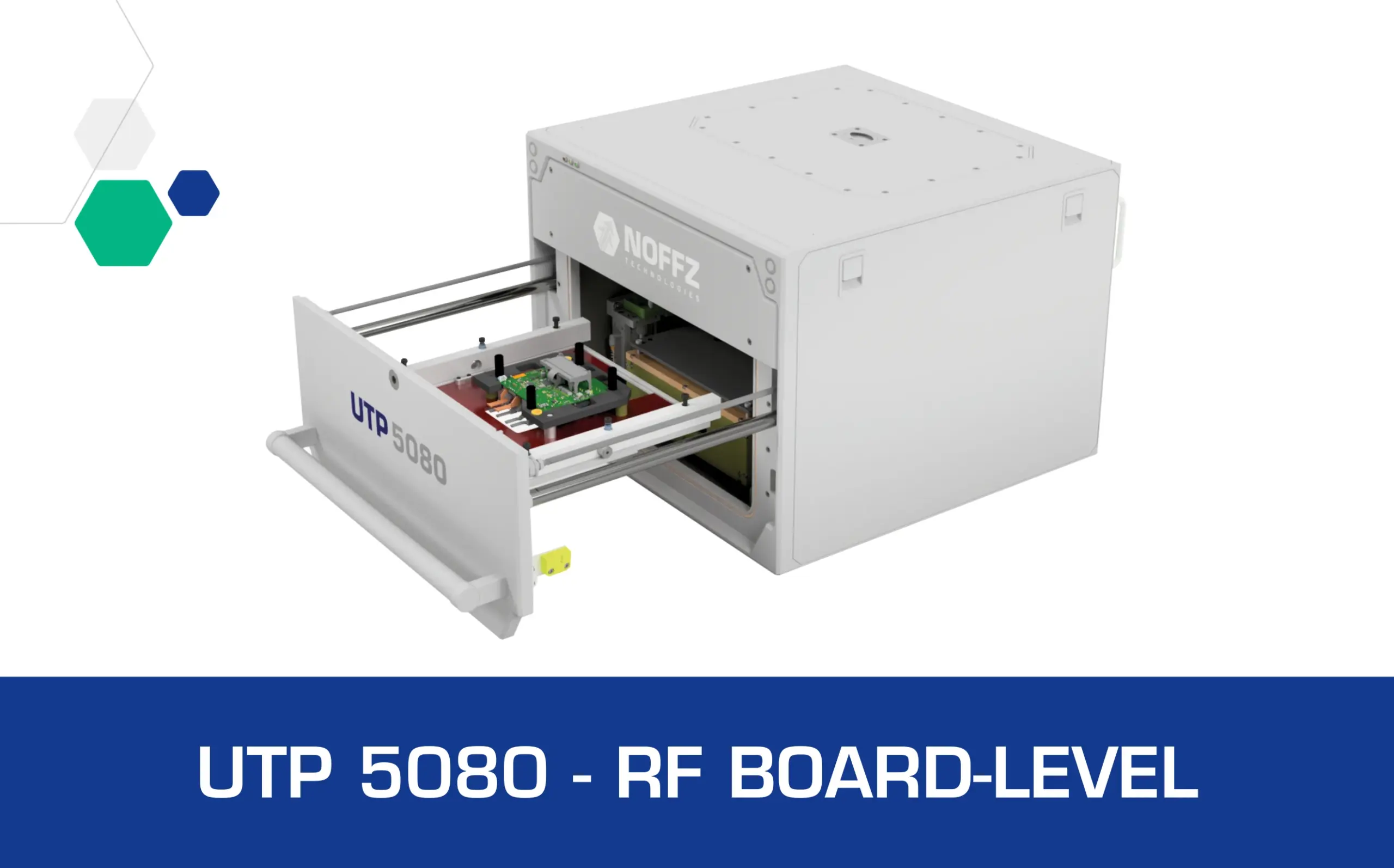

Adapted to Your Needs

Customized RF Solutions for EW and Research
Drone detection technologies
DISCOVER OUR DRONE DETECTION SOLUTIONS
Drone detection technologies
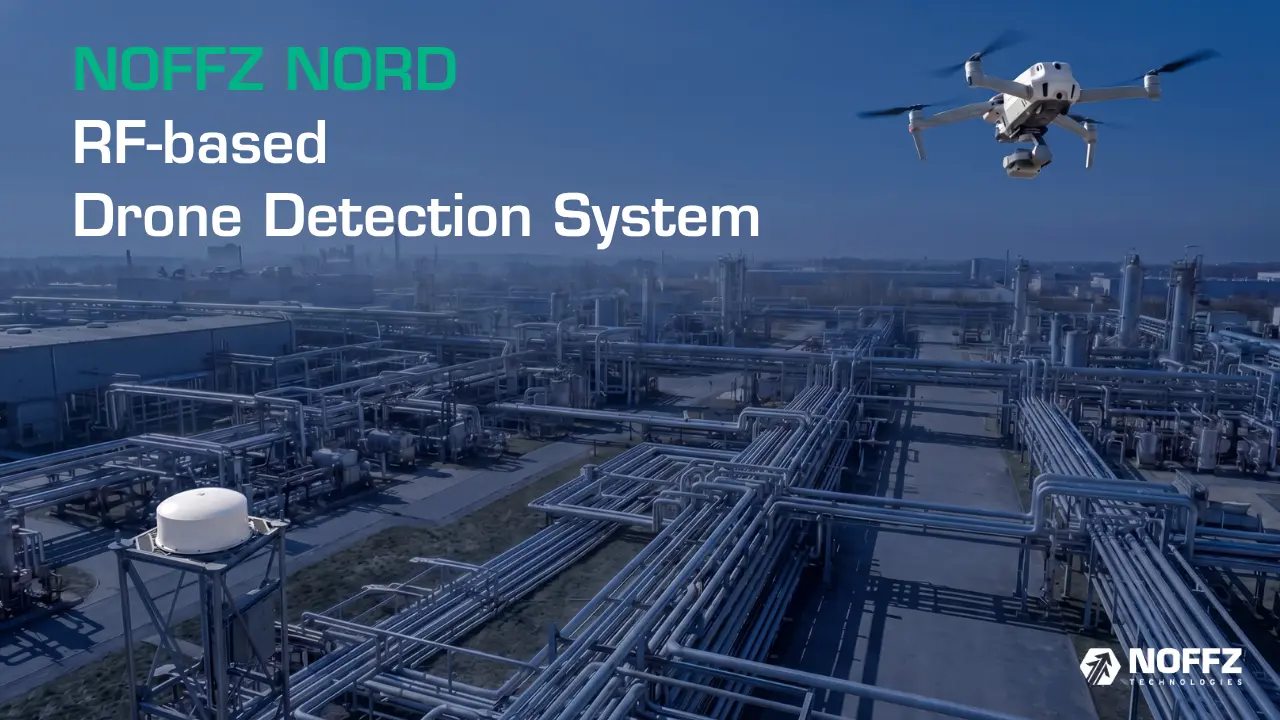
RF-based Drone Detection System with Real-time Protocol Decoding
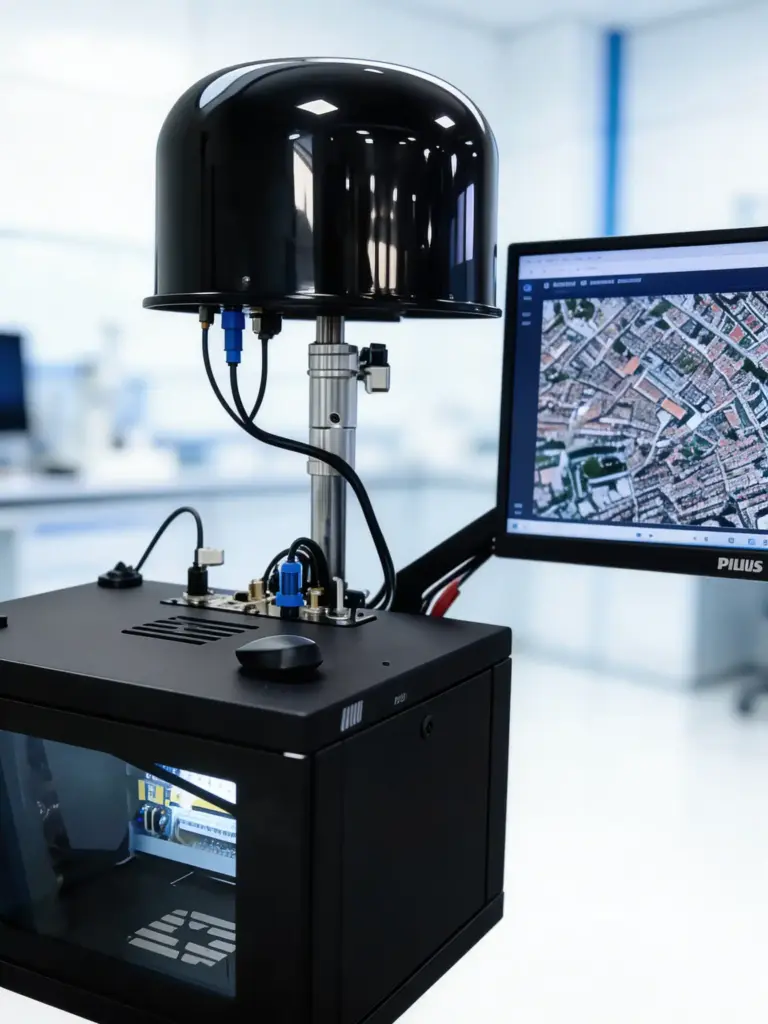
NORD (NOFFZ Observation and Radio Detection) is an RF-based drone detection and real-time protocol decoding system built on NI USRP hardware and leveraging an FPGA-based architecture.
The system determines the direction of arrival (DoA), operating frequency, signal power, and other key transmission parameters associated with drone communication links. In addition to detection, NORD performs real-time decoding of commercial drone communication protocols up to 5 km range.
The core concept of NORD is not a fixed, one-size-fits-all solution, but full customization depending on customer requirements. In addition to the main signal processing software, the system incorporates a configurable antenna subsystem and RF front-end architecture, allowing optimization of detection range, directional accuracy, frequency selectivity, and overall system performance.

SPECIFICATIONS
NORD — Specifications
- Wide band frequency range 70 MHz - 6 GHz
- Sector antennas with fast RF switching, scanning the entire space in less than 2 s (360 ̊ azimuth, 90 ̊ elevation)
- Up to 5 km detection
- Channelizer (sector, operating frequency, bandwidth, signal power)
- Real-time DJI protocol decoding (Drone ID, Drone GPS, Pilot GPS, Home GPS)
- Integration with other systems – jammers, optical surveillance systems, central control units
- Independent receiving chains for easy maintenance
- Indoor and outdoor usage
- Different level of ruggedization depending on operating environment and customer needs
Intelligent Drone Detection in Action
Gain full control of your airspace with intelligent drone detection. Our system scans a full 360° radius in real time, detects drones, distinguishes between friendly and potentially hostile objects, and even identifies the controller – ensuring complete situational awareness and the protection of critical infrastructure.
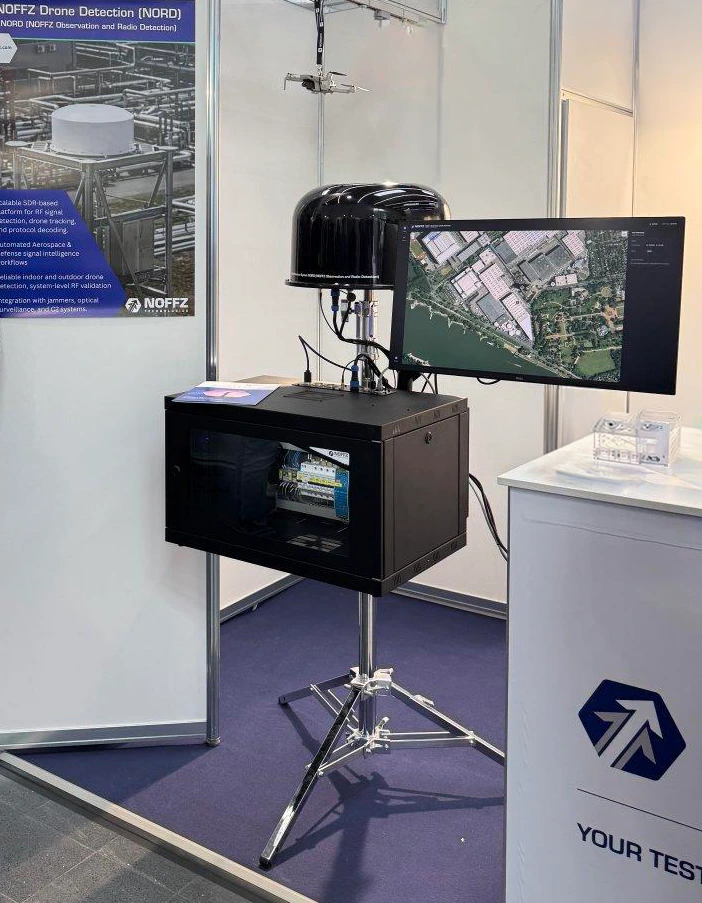
Drone Detection System
In this configuration, the focus is on a system equipped with a single rotating directional antenna and an RF front-end optimized for up to 2 km range. The system is configured for commercial ISM bands at 2.4 GHz and 5.8 GHz, with up to 160 MHz bandwidth per receive channel.
Such a configuration is well suited for protection of sensitive locations against commercial drone incursions and can be integrated into larger counter-UAS systems, including jamming subsystems and complementary sensors (e.g., optical systems).
The demo highlights the deployment of NI USRPs for high-performance RF surveillance systems, combining spectrum sensing, highspeed protocol analysis and directional localization in a compact, field-deployable setup.

Radar Systems Development
DISCOVER THE RADAR SYSTEM FUNCTIONS
Radar Systems Development
Precision Radar Systems for Civil and Defense Applications
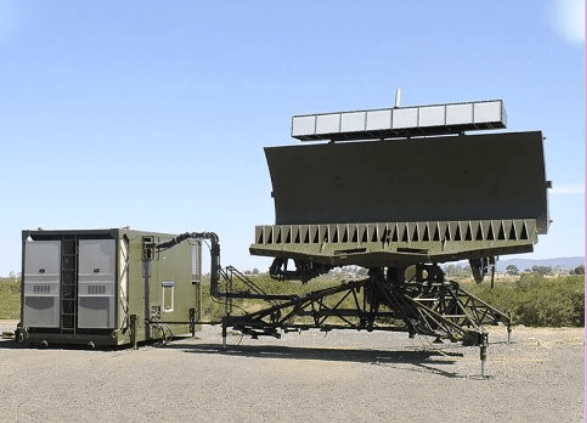
Our radar transceivers are engineered to meet the rigorous demands of modern aerospace and defense systems. By integrating advanced RF design with FPGA-based processing, we create tailored solutions which ensure exceptional performance in early warning and air defense applications.
Radar Transceiver — Specifications
Support for different pulse compression methods
- (13-bit Barker Code Modulation, Phase-coded modulation, FM, AM) ensures precise, high-resolution transmission for superior target detection and clarity.
Advanced Signal Processing
- Integrated algorithms, including Moving Target Indication (MTI), clutter detection, and CFAR, provide accurate target identification even in challenging environments.
Dynamic Test Scenarios
- Simulate up to 600 targets with customizable parameters for speed, phase, direction, and signal levels, enabling comprehensive and realistic performance evaluation.
- Engineered for flexibility and precision, our transceiver empowers your radar systems to meet the demands of modern operational challenges with confidence.
NOFFZ: MARKET LEADER IN RADAR TESTING
Transportation • Aerospace & Defense • and more
GNSS positioning systems
GNSS positioning systems
Accurate Navigation and Localization for Urban and Tactical Environments
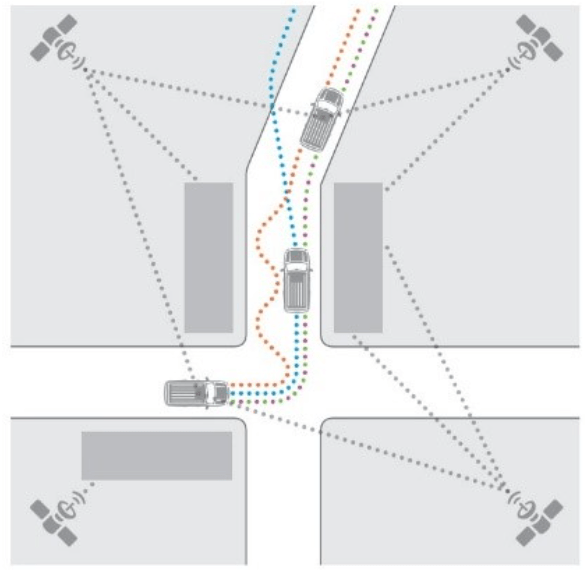
In collaboration with the Institute of Space Technology and Applications at the University of the Bundeswehr Munich, NOFFZ Technologies has developed an innovative frontend that enables highly precise positioning by integrating GNSS, 4G/5G, and other radio signals.
This advanced frontend is engineered to meet the stringent requirements of modern navigation systems, offering flexibility and adaptability for future research and development in positioning technologies.
For more detailed information, please refer to our research report.
GNSS Front End — Key Features
- Broad Frequency Reception: Capable of receiving signals ranging from 10 MHz to 6 GHz, with the ability to sample higher frequency bands, such as the Ku-band used for Starlink downlink signals, through external mixers.
- Multi-Channel Support: Equipped with four high-frequency channels, facilitating comprehensive signal analysis and enhanced positioning accuracy.
- IMU Integration: Supports the incorporation of Inertial Measurement Units (IMUs), providing robust solutions for inertial navigation and ensuring precise movement tracking.
- Customized SDR Architecture: Built on a tailored Software Defined Radio (SDR) platform specifically designed for GNSS/INS applications, enabling precise point positioning (PPP) with an accuracy of up to three centimeters.
5G/6G mmWave Research and Prototyping
5G/6G mmWave Research and Prototyping
Innovative Research in Wireless Communication and Radar Sensing
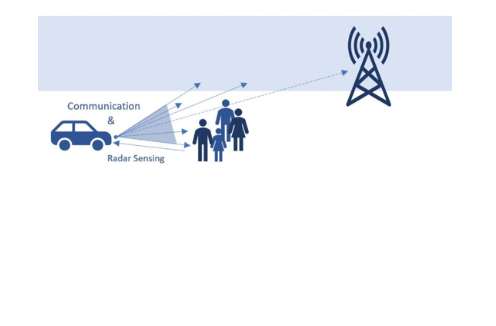
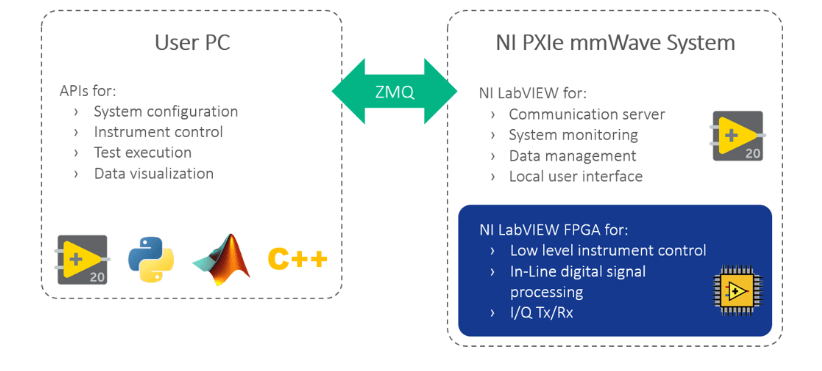
At NOFFZ Technologies, we are driving innovation in 5G and 6G mmWave research, enabling next-generation communication and sensing systems. With deep domain expertise and high-performance platforms, we empower researchers and engineers to prototype and test cutting-edge technologies with unmatched speed, precision, and reliability.
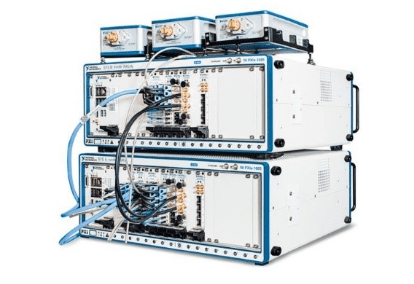
We utilize commercial off-the-shelf (COTS) mmWave research platforms, such as NI MTS and SDRs, and enhance them with tailored APIs, FPGA modifications, and advanced mmWave components. These enhancements enable our platforms to address the unique challenges of 5G/6G technologies in the 71–76 GHz and 110–170 GHz frequency ranges.
Our proprietary NOFFZ mmWave prototyping software platform supports real-time testing and development, including the integration of custom FPGA models. This feature allows seamless evaluation and optimization of algorithms, ensuring real-world applicability and performance.
Learn more: Efficiently Prototyping 6G Joint Comms and Sensing Systems
Unlock the full potential of mmWave innovation with NOFFZ Technologies.
Channel Sounding for Naval Applications
Channel Sounding for Naval Applications
Advanced antenna array design for harsh ocean environments
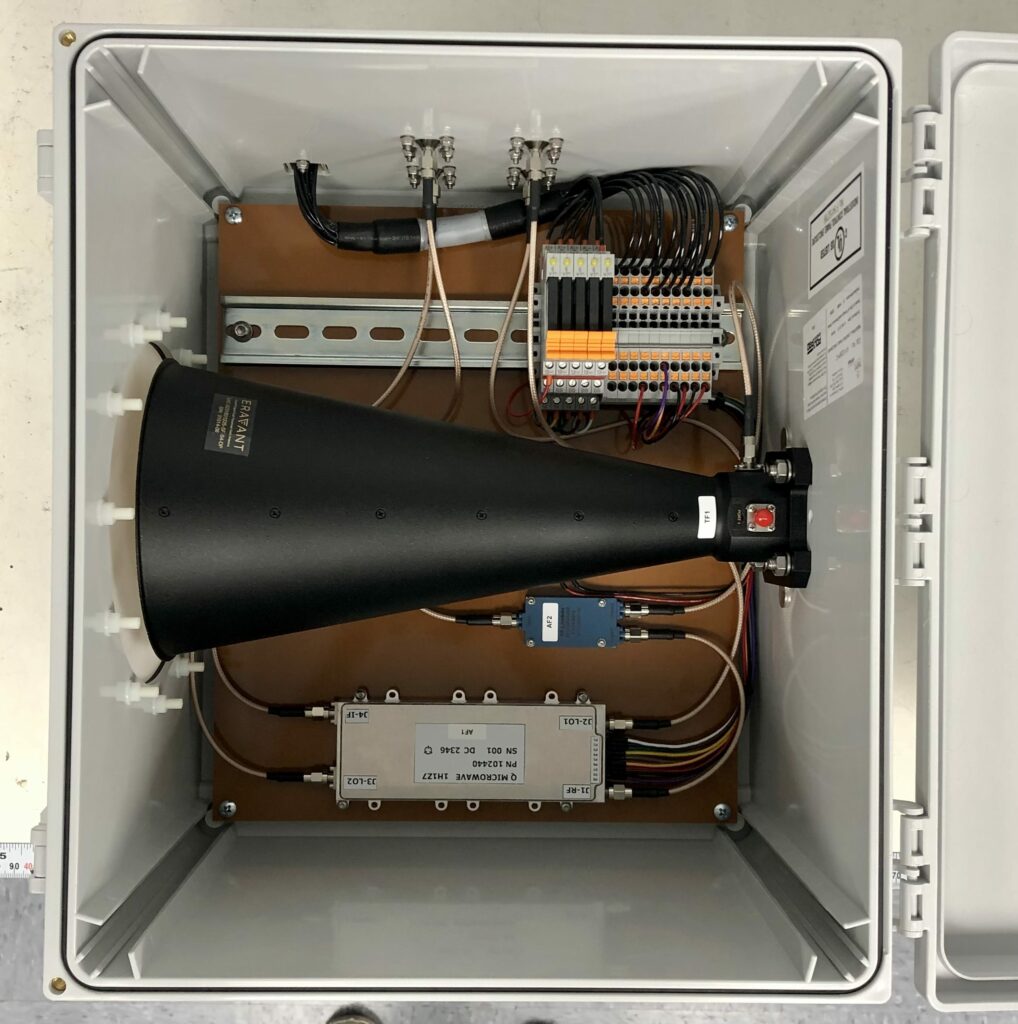
In partnership with the University of California, San Diego, we deliver robust solutions for naval radar channel sounding research. We have developed a wide tuning range antenna array designed to characterize RF propagation at varying frequencies and power levels over the ocean surface. The antenna array was engineered to withstand the harsh conditions and corrosion typically encountered in marine environments.
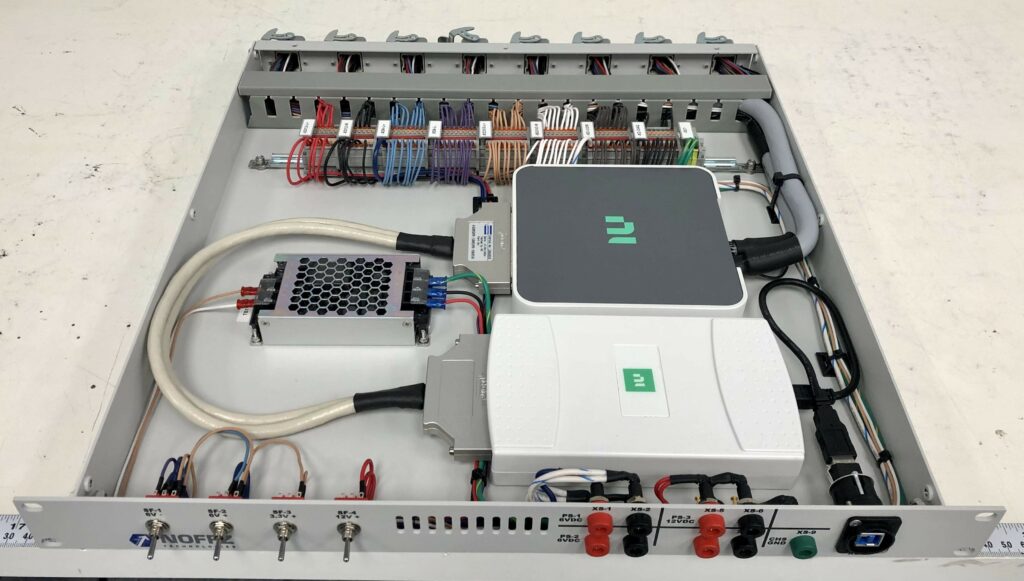
Our solution enabled the customer to efficiently and reliably collect high-quality data during the short time they had access to their test site. The weather-proof antenna boxes with RF downconverter are designed for fast setup and dismantling.
- 18 GHz channel sounding project.
- Streamlined data acquisition process: an automated script controls a range of instruments, including oscilloscopes, power supplies, a vector signal generator, downconverters, and low-noise synthesizers.
- Accurate measurements: a predefined schedule ensures consistent measurements from an 8-channel antenna array.
- Python-based control software.
- Valuable insights: RF performance over ocean surfaces extracted from propagation loss calculations.
STREAMLINED AND RELIABLE
Our Products Designed to Support Your Testing Needs

Downloads
Our brochures for download
Frequently Asked Questions (FAQ)
What solutions does NOFFZ offer for aerospace and defense?
NOFFZ Technologies develops customised radio communication and RF systems for aerospace and defense. The portfolio covers RF-based drone detection, radar transceivers for early warning and air defence applications, GNSS frontends for high-precision positioning, 5G/6G mmWave platforms for research and prototyping, and channel sounding for naval applications. All systems are built on software-defined radio (SDR) and FPGA-based signal processing, complemented by RF test systems from the UTP platform.
Does NOFFZ offer a drone detection system?
Yes. NORD (NOFFZ Observation and Radio Detection) is an RF-based drone detection system with real-time decoding of commercial drone protocols. It operates from 70 MHz to 6 GHz, detects drones at ranges up to 5 km, and determines direction of arrival, operating frequency, bandwidth and signal power. Full technical specifications are available on the NORD product page.
Does NOFFZ collaborate with research institutions?
Yes. The GNSS frontend for high-precision positioning was developed in cooperation with the Institute of Space Technology and Space Applications at the University of the Bundeswehr Munich, with the results documented in a publicly available research report. For radar channel research in naval environments, NOFFZ developed a wide-tuning-range antenna array together with the University of California, San Diego to characterise RF propagation over the sea surface.
Does NOFFZ build custom systems or standard products?
NOFFZ builds predominantly custom systems. Architecture, design and development are matched to device characteristics and project goals — including RF connectivity through the in-house Signal Conditioning Unit (SCU), customer-specific switching and conditioning cards, and the modular UTP 50XY adapter platform. Configurable products such as the Base Station Emulator and the GNSS Simulator complement the custom work.
What test systems does NOFFZ offer for RF applications in defense?
The UTP platform covers the full measurement spectrum: high-voltage applications, RF communication, and systems with high-speed digital interfaces. The systems can be deployed as development and validation testers, as functional production testers, or as mobile test stations. The UTP 50XY RF test adapters are modular, CE-compliant, and support RF-shielded test requirements from high-density board-level testing to end-of-line testing in series production.
What is the NOFFZ Signal Conditioning Unit (SCU)?
The SCU is a NOFFZ-developed assembly handling RF connectivity and the interface to the device under test — typically the most demanding interface in an RF test setup. It has already been deployed in hundreds of projects. It is complemented by in-house development and production of highly customer-specific switching and conditioning cards.
What capabilities do NOFFZ radar transceivers offer?
NOFFZ radar transceivers support a range of pulse compression techniques including 13-bit Barker code modulation, phase-coded modulation, FM and AM. Integrated algorithms such as Moving Target Indication (MTI), clutter detection and CFAR deliver accurate target identification in challenging environments. The systems are designed for early warning and air defence applications, combining advanced RF design with FPGA-based processing.
How many targets can NOFFZ radar systems simulate?
The radar transceivers support simulation of up to 600 targets with adjustable parameters for velocity, phase, direction and signal level. This allows dynamic test scenarios to be constructed for comprehensive and realistic radar system performance evaluation.
What positioning accuracy does the NOFFZ GNSS frontend achieve?
The GNSS frontend achieves accuracy down to three centimetres using Precise Point Positioning (PPP). It receives signals from 10 MHz to 6 GHz — and, via external mixers, higher bands such as the Ku band used for Starlink downlinks — offers four radio frequency channels, and supports integration of Inertial Measurement Units (IMU) for inertial navigation. It is built on an SDR platform developed specifically for GNSS/INS applications.
What is the difference between the NOFFZ GNSS frontend and the GNSS simulator?
The GNSS frontend is a receiving system: it integrates GNSS, 4G/5G and other radio signals for high-precision positioning in urban and tactical environments. The GNSS Simulator SUTP 5017, by contrast, generates GNSS signals in real time to replicate custom test scenarios for GPS, Galileo and Glonass. One supports navigation; the other tests navigation receivers.
What frequency ranges does the NOFFZ 5G/6G mmWave platform cover?
The NOFFZ mmWave platform covers the 71–76 GHz and 110–170 GHz frequency ranges. It builds on commercially available research platforms such as NI MTS and SDRs, extended with customer-specific APIs, FPGA modifications and advanced mmWave components. The proprietary NOFFZ mmWave prototyping software platform supports real-time testing and development, including integration of customer-specific FPGA models.
What is channel sounding and how is it used in naval applications?
Channel sounding characterises how radio signals propagate through a given environment — in the maritime case, RF propagation over the sea surface across different frequencies and power levels. NOFFZ developed a wide-tuning-range antenna array for this purpose together with the University of California, San Diego, designed for an 18 GHz channel sounding project. Weatherproof antenna boxes with RF downconverters allow rapid setup and teardown, while Python-based control software automates measurement runs across an 8-channel antenna array.
What hardware platforms are NOFFZ RF systems built on?
NOFFZ builds on commercial off-the-shelf COTS platforms extended with in-house development. NORD is built on NI USRP hardware with FPGA-based signal processing; the mmWave systems on NI MTS and SDRs with customer-specific APIs and FPGA modifications. This approach keeps the upgrade path open and avoids dependence on proprietary hardware, while application-specific performance comes from proprietary RF frontends, antenna subsystems and software.
DO YOU HAVE ANY QUESTIONS?
Speak with our experts directly!
Let us know the details of your project. We’re curious about your ideas, products, and requirements and would be glad to advise you specifically about your requests.
Together we’ll make your project a success!
Let’s set up a meeting.